The kingdom’s first Pride celebrations were held in June 2018, with Melusi Simelane as lead organiser. It brought LGBTI people and allies onto the streets of Eswatini, and showed that one day of visibility was not enough.
A new, people-driven and membership-based organisation. Its logo carries the rainbow flag, the transgender flag, and black and brown stripes to embrace black and brown identities often excluded from the global LGBTI movement.
ESGM applied to the Registrar of Companies. The Registrar refused, arguing that ESGM’s objectives were unlawful because same-sex intimacy is illegal in Eswatini. ESGM and its members took the refusal to the High Court, demanding the right to freedom of association.
ESGM held Pride Month in September, timed to coincide with the kingdom’s independence celebrations, to draw attention to the colonial-era law against sodomy. The month closed with a Pride after party on 28 September.
We held focus groups with 109 LGBTI people in all four regions on their lived experiences and what they need from the law. What they told us shaped our advocacy strategy.
Eswatini’s Commission on Human Rights and Public Administration/Integrity found that refusing to register ESGM was discriminatory, and directed the Registrar of Companies to register us.
A full year passed with no judgement in ESGM v the Registrar of Companies. We called out the inertia as a disinterest in the human rights of LGBTI citizens.
On 29 April 2022 a majority of the High Court upheld the Registrar’s decision. One judge dissented and would have registered ESGM. We appealed.
June 2022
A colourful Pride celebration
Pride is celebrated in full colour, and makes the newspapers.
June 2023
The Supreme Court rules in our favour
On 16 June 2023 the Supreme Court unanimously found the refusal unconstitutional and ordered the Minister to reconsider our application within 60 days.
The Minister of Commerce, Industry and Trade refused to register ESGM a second time, citing customary law. In August 2025 we went back to the High Court.
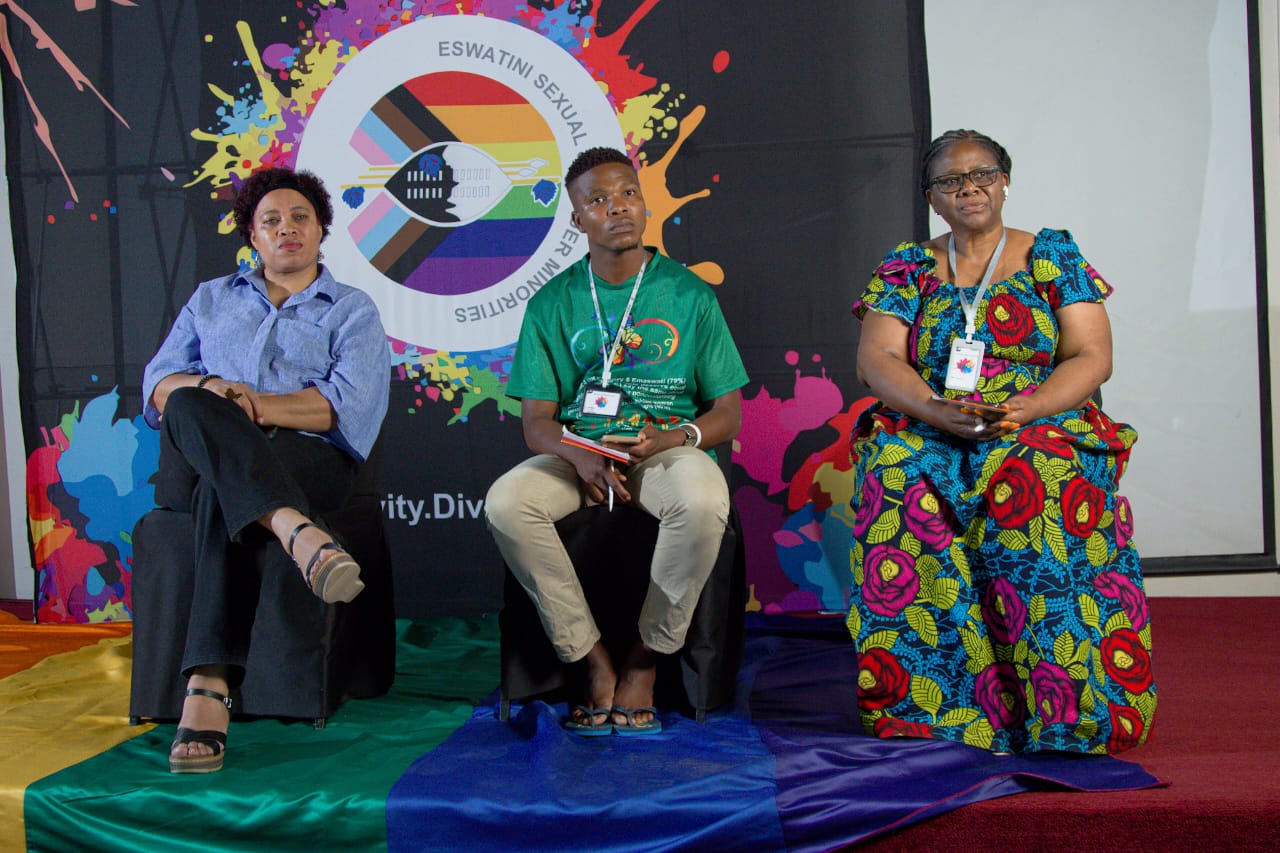
Activists, community members and allies meet at Sibane Sami Hotel from 3 to 5 September under the theme “From Margins to Momentum: Queer Rights, Bold Futures”.
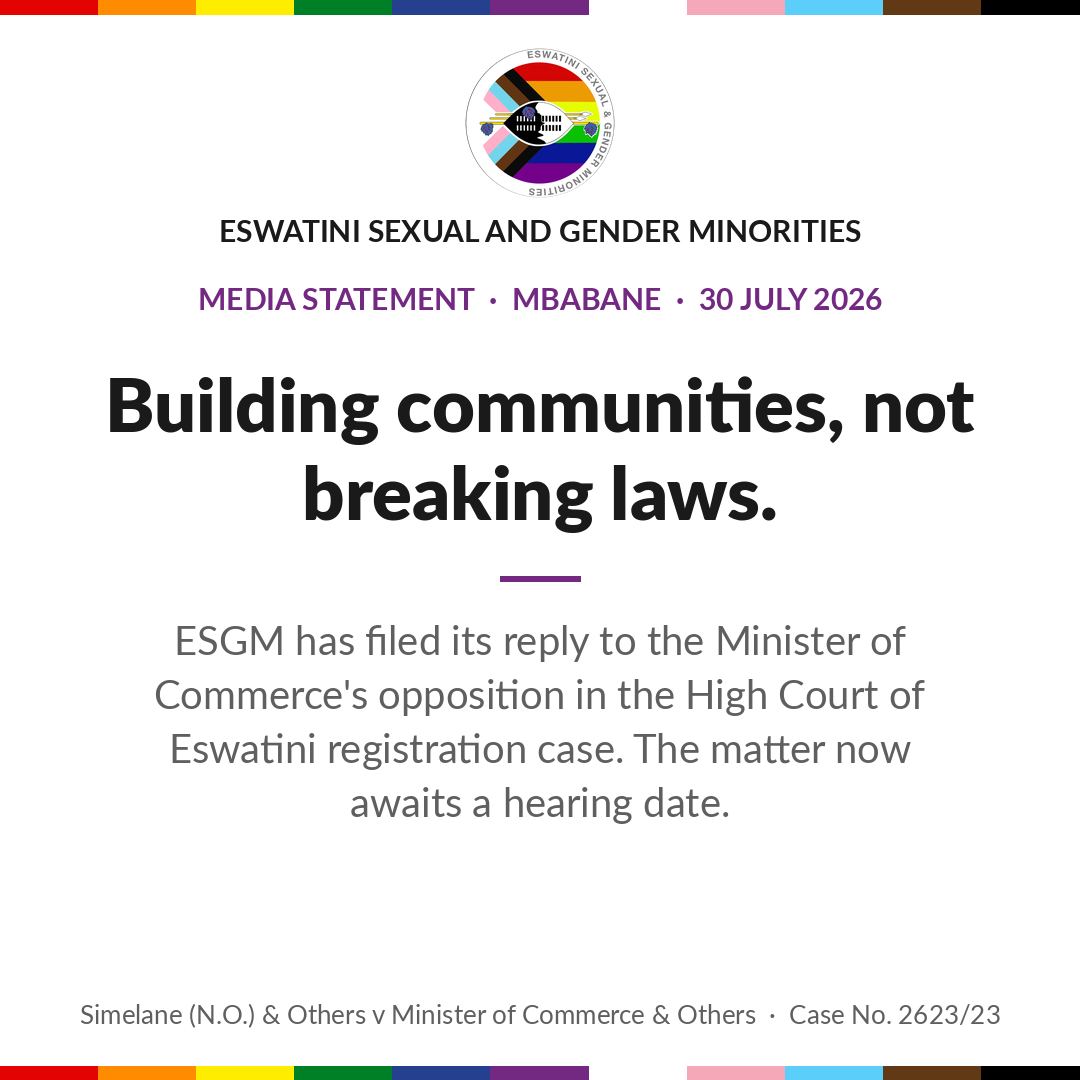
ESGM and its co-applicants file a replying affidavit in Simelane (N.O.) & Others v Minister of Commerce, Industry and Trade & Others, Case No. 2623/23, paving the way for a hearing.
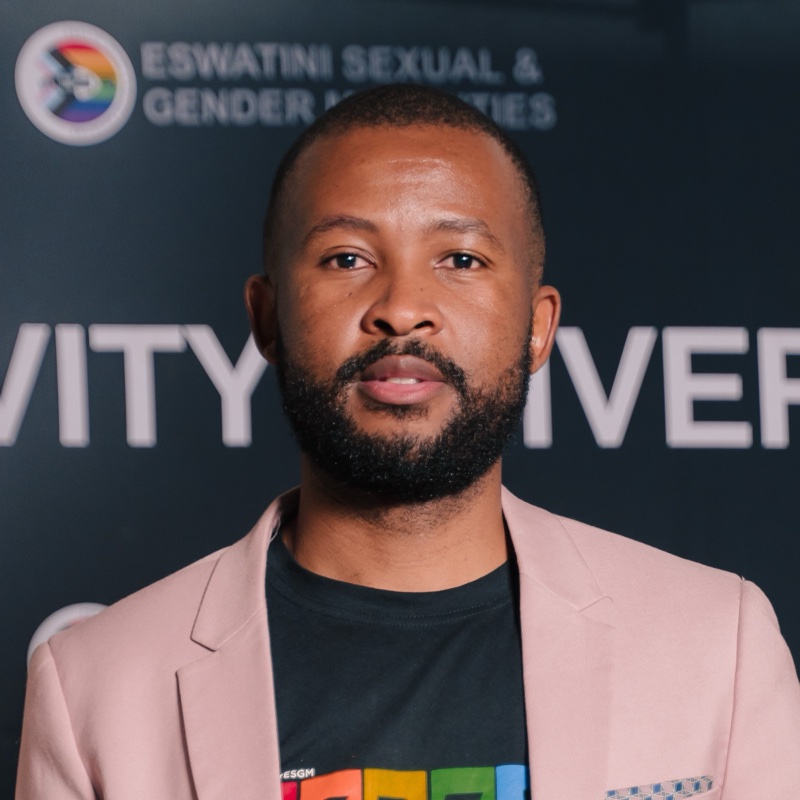
I founded Eswatini Sexual and Gender Minorities because I was no longer willing to wait for permission to be free.
The realisation came from the inaugural 2018 Pride. As lead organiser, I saw what it took to put our community on the streets of a country that would rather we stayed invisible: negotiating for space, absorbing the hostility, and carrying the fear of the people who marched anyway. When it was over, it was clear that one day of visibility was not enough. We needed something that would last after the march ended, an institution that belonged to us.
In a country where the law still refuses to see us, I wanted an organisation owned by its own people. It would not ask whether we deserved dignity. It would start from the fact that we already have it.
From the beginning, ESGM was built differently. It was the first membership-based LGBTI organisation in the Kingdom, and the people it serves set its direction. A colonial-era law still criminalises our community, and the government has refused to register us. Neither has stopped the work. Both have made our purpose clearer: a movement cannot be criminalised out of existence.
I have carried Eswatini's story into rooms that rarely hear it, including the Commonwealth, the United Nations in Geneva and the African Commission on Human and Peoples' Rights. But I have never measured this work by the size of the room. I measure it by whether a young person at home can wake up believing the constitution belongs to them too. Protecting that belief is why we exist.
“A movement cannot be criminalised out of existence.”