In May 2020 Eswatini’s Commission on Human Rights and Public Administration/Integrity completed its assessment of ESGM’s complaint against the Registrar of Companies, who had refused to register ESGM in September 2019. The Commission, a constitutional body established under section 163 of the Constitution, found the refusal discriminatory and directed the Registrar to register ESGM. The full report is below.
What the Commission found
- The Registrar’s refusal was discriminatory because it was based on the sexual orientation of the people ESGM serves.
- Leaving “sex” and “sexual orientation” out of the Constitution’s list of grounds of discrimination does not mean that discrimination on those grounds is allowed. In the Commission’s words, “the spirit, purport and object of the constitution is such that all people enjoy equal rights.”
- ESGM’s objectives are lawful: protecting the rights, health and wellbeing of LGBTI people. The Commission noted that no law in Eswatini prohibits same-sex relationships.
- The refusal also undermines other rights, such as freedom of association, and could give public officials in health, policing and other public services licence to discriminate.
What the Commission directed
- Using its powers under section 164(1)(d) of the Constitution, the Commission directed the Registrar of Companies to reverse the decision and register ESGM.
- It recommended reforming the Constitution and the Companies Act so that they explicitly protect LGBTI people by adding the words “sex, sexual orientation and gender identity”.
- If the Registrar did not comply, it advised ESGM to go to the courts to enforce registration.
What happened next
ESGM was still not registered, and the High Court heard the case on 20 October 2020. In June 2023, the Supreme Court unanimously found the refusal unconstitutional.
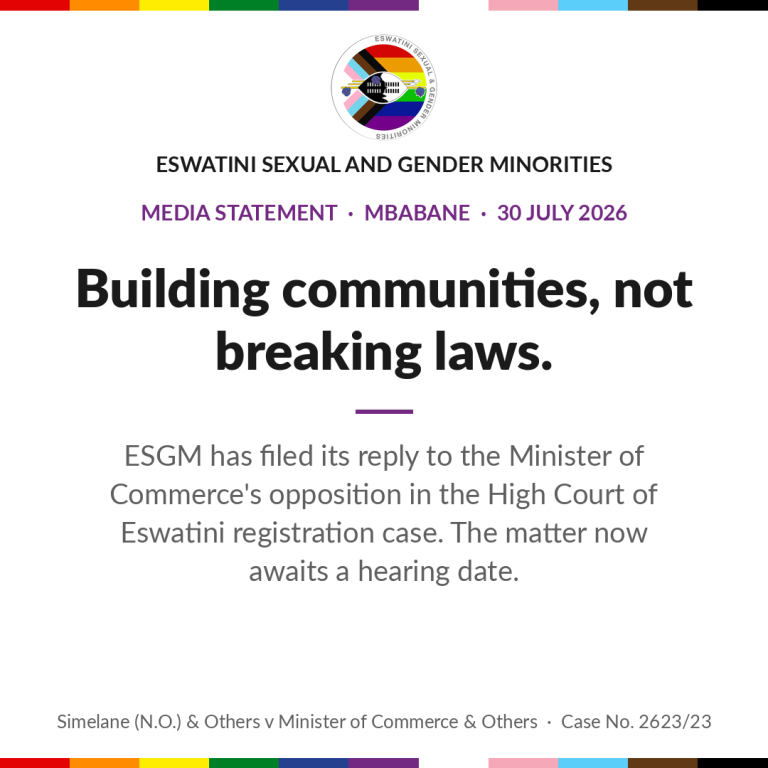
ESGM is still fighting for registration in the High Court. Follow the registration case.
Document
Media enquiries info@eswatiniminorities.org
More on registration case